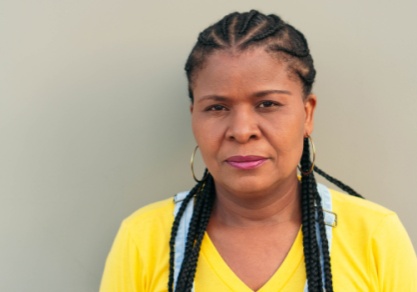
Many refugees who live in the UK are eager to work but encounter frequent setbacks and barriers to entry when seeking employment. Our Work Placement Programme aims to help people who are in homeless supported accommodation and facing difficulty in accessing work. We provide short workplace opportunities to help people gain practical workplace experience to help access employment. This approach helped Joyce. This is her story.
Joyce, a refugee from Uganda, was referred into the Work Placement Programme to gain work experience in the care sector. She was clear that she wanted to work with older people and showed a strong determination to do so. She had made two applications to work as a care assistant with the NHS but unfortunately had not been successful. She did reach the interview stage during her second application where the following barriers were identified:
- that she didn’t have any work history in the UK
- that cultural differences had likely made her present as too timid and subservient in her interview
- that her English, whilst reasonably fluent, still needed some improvement
Upon identifying these barriers, our Work Placement Coordinator, Judith, approached a day care centre to see if they would consider taking Joyce on for a work placement. The care centre agreed and an introductory visit was set up with Joyce, the care centre manager and Judith. The visit went well and upon being asked when she would like to start, Joyce replied, “straight away”, highlighting her high levels of motivation. A placement of 2 days a week for 5 weeks was agreed, which allowed Joyce to continue with her English college classes and worked well for the centre.
From the beginning, feedback from the centre was positive. Judith was told that Joyce was a natural with older people. Joyce also fed back that she was enjoying the work immensely.
Whilst the placement continued to go smoothly, there were some cultural adjustments that Joyce struggled with. For example, Joyce’s manager told her she could always ask if there were things she was uncertain or worried about. Joyce had been brought up to not question or take problems to managers which made this adjustment difficult for her at first. She also found calling managers by their first names disrespectful but eventually, Joyce got more used to these differences and embraced them.
Joyce continued to impress staff at the centre with her commitment and skilled approach to support, resulting in Joyce being offered part time work at the end of her placement, to her delight. It was agreed by all that Judith would stay linked in with Joyce and staff at the centre for the first 4 months of Joyce’s employment to check that this transition went smoothly. Judith supported Joyce to go through her employment contract to make sure she understood the terms and conditions. Additionally, Judith also liaised with the centre and Joyce regarding the number of hours Joyce could work per month without negatively impacting her benefits.
Joyce has continued to flourish since working at the centre. She has completed a care qualification and has increased her working hours to 30 hours a week. The centre manager has even said to Joyce that when he retires in a few years’ time, he can see her taking over!